NYX Game Awards Winner Interview
Lois He
HYZ Studio, United States
Lois He is the co-founder of HYZ Studio, creating immersive works where perception becomes part of the story. Her project Between Empty places players in a surreal world of mirror-bodied beings, exploring how identity and emotion shift when reflection disappears.
1 Congratulations on your proud achievements in the NYX Game Awards! Can you share more about your game, your studio, or yourself?
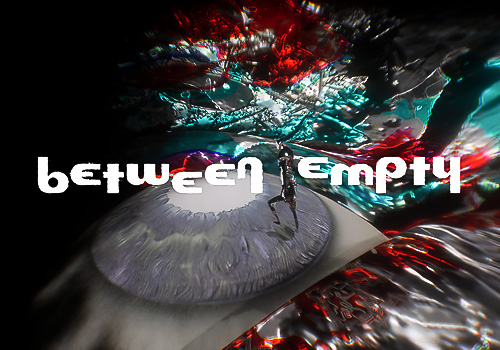
Between Empty is a first-person narrative game set in a surreal world where beings made of mirrors can only exist when the outside world is reflected on their mirrored bodies. Players explore how identity, emotion, and selfhood depend on external reflection—until they discover that darkness may reveal something truer beneath the surface. It was created by HYZ Studio, a New York–based collective I co-founded that blends film language, interactive technology, and spatial storytelling. Our practice sits at the intersection of art and technology—we design experiences where the audience’s perception literally shapes the world around them.
2 What was the moment you realized you wanted to create games, and how has that passion evolved over time?
Coming from a film background, I was fascinated by how interactivity could extend cinematic emotion into lived experience. The turning point came when I realized that players could feel philosophy—not just watch it. Over time, that passion evolved from crafting linear stories to designing systems of perception and agency, where emotion emerges through the player’s own actions.
3 Tell us about your studio-what's the mission that drives your team's creative process?
Our team’s mission is to redefine storytelling in the age of algorithmic creativity. Between Empty currently exists as a PC demo, but we plan to expand it into other mediums, including VR and large-scale immersive formats. We see technology not as a tool, but as a living collaborator—capable of translating invisible emotions like light, memory, and reflection into spatial experiences. Each of our projects experiments with this idea, from mirror-based conceptual worlds to large-scale projection performances.
4 What's the story or concept behind your award-winning game, and what inspired its creation?
Between Empty grew from an anxiety shared by many creators today—the fear of losing selfhood through constant exposure and reflection. The mirror beings became a metaphor for that condition. The game asks: if your emotions depend on what others project onto you, who are you in darkness?
5 What do you think is the most innovative or unique feature of your game, and how does it enhance the player experience?
Its Self–World Interface System allows players to remove or attach mirror shards from their bodies, changing which parts of the world become visible. This mechanic turns perception itself into gameplay—visibility, emotion, and identity all depend on how much of yourself you choose to reflect or conceal.
6 What's the most unexpected challenge you faced during development, and how did your team tackle it?
Translating abstract emotion into tangible mechanics was a major challenge. We built countless shader and lighting prototypes to make “reflection” feel alive—where a slight shift of light alters both the space and the protagonist’s sanity. The key was merging visual design and emotion through real-time systems rather than cutscenes.
7 How do you approach balancing technical limitations with creative ambition in your games?
We’ve faced many challenges—especially with the rendering budget, since we aim to make reflected light behave and feel real. The system is still being optimized, but we chose not to simplify or fake the effect because the immersive experience depends on its authenticity. For us, technical limitations are part of the design process, not something to compromise the emotion for.
8 What's a current trend in gaming that you think holds immense potential to become a major element in the coming future?
I see a shift toward embodied storytelling—where emotion is conveyed not through dialogue, but through sensory participation: light, proximity, gaze, and collective behavior. Especially in immersive and VR contexts, players are becoming part of the space rather than simply using a keyboard and mouse.
9 How do you see AI, AR, or VR technologies being implemented increasingly, and do you plan to explore further into this area?
Absolutely. HYZ Studio’s projects often merge AI-driven emotional systems with real-time VR and projection environments. I see AI, AR, and VR as new artistic languages—each reshaping how we experience stories. Yet the emotional core of storytelling remains unchanged. We actively explore new mediums, but we never let technology define the boundary of creativity. For us, these tools are not separate categories, but interconnected forms of expression.
10 What kind of emotional or intellectual impact do you hope your game has on players?
I hope players leave with an uneasy intimacy—aware of how much of their identity is constructed through others’ perception. It’s not fear in the traditional horror sense, but an existential unease that softens into tenderness once they realize they can reclaim their inner light.
11 If players could take away one message or feeling from your game, what would it be?
That to truly see yourself, you sometimes have to step into darkness. Reflection can be comforting, but real self-understanding begins when the mirror breaks.
12 What's a dream project or concept you've always wanted to explore, but haven't had the chance to yet?
A multiplayer mixed-reality experience where each participant’s perception literally builds a shared emotional landscape—part VR, part architectural projection, part social experiment. It would merge storytelling, light, and collective decision-making into one living artwork.
13 What's next for your studio? Can you tease any upcoming ideas or projects that can be shared?
Our studio is currently developing along two parallel paths. On one side, we collaborate with museums and brands to create immersive installations and experiential marketing projects. On the other, we continue building our own original works. We’re developing In the Skin Of…, a VR installation exploring sensory detachment and empathy; and Where the Island Was, a live performance where memories distort through audience movement. Both projects continue our inquiry into perception, power, and the fragility of connection.
14 What's the biggest change you've seen in the gaming industry since you started, and how have you adapted to it?
The democratization of tools and AI has shifted value from skill to vision. We adapted by focusing on conceptual depth—designing experiences that can’t be mass-produced because they rely on lived emotion, not just visuals.
15 What's your secret to designing a game world that feels alive and immersive to players?
Treat every element—light, sound, physics—as part of a character’s psychology. The environment should respond to the player, not just host them.
16 If you could collaborate with any game developer or studio in the world, who would it be and why?
I would love to collaborate with the team behind What Remains of Edith Finch. Their understanding of narrative design is truly unique—each moment feels deeply personal and cinematic. I admire how they transform emotion into playable form, and I would love to learn from their approach to storytelling through space and experience.
17 What's one piece of advice you'd give to someone dreaming of starting their journey in game development?
Don’t chase polish—chase honesty. Technology changes quickly, but sincerity in how you translate emotion into interaction will always stand out. Start small. I’m still learning to follow this myself—it’s something I remind myself of constantly while creating.